
Busuu: Learn & Speak Languages
BusuuEducation
4.718.27K Reviews
- Version
- 32.52.0(1807115)
- Installs
- 50.00M
- Age Rating
- Everyone
Screenshots

Our Review of Busuu: Learn & Speak Languages
 Analysis by Appyee
When I first opened Busuu: Learn & Speak Languages, I wanted a clear answer to a simple question: could I turn a vague intention to learn into a routine I would actually keep? Busuu is an education app from developer Busuu, and its lessons bring together vocabulary, pronunciation, grammar, review, and opportunities to interact with other learners. I found it most useful when I treated it as a guided place to practise regularly, not as a shortcut to fluency.
What to expect from your first visit
The experience is organised around choosing a language and working through lessons rather than browsing a loose collection of tips. Spanish, Japanese, French, English, German, and other languages are among the options. The app is free to download, although it also offers in-app purchases ranging from $0.99 to $169.99 per item, so it is worth checking what is included before committing to a purchase.
Busuu has a 4.7 average from around 1.1 million ratings, and it has been installed over 50 million times. Those figures suggest that it reaches a broad range of learners, but they do not tell you whether its teaching style will suit you. The app is rated for Everyone, and its current version is 32.30.0(1575420), with Android 9 as the minimum operating system. It was released on July 29, 2011, so this is an established learning app rather than a new experiment.
If you are deciding between Busuu and a flashcard app, the key difference is the shape of the work. Flashcards are handy when you only want to drill words you have selected; Busuu’s structured lessons make more sense when you want vocabulary in the context of pronunciation and grammar. I would choose the former for quick, targeted memorisation and Busuu for a guided learning path that helps connect those pieces.
Getting Started with Busuu
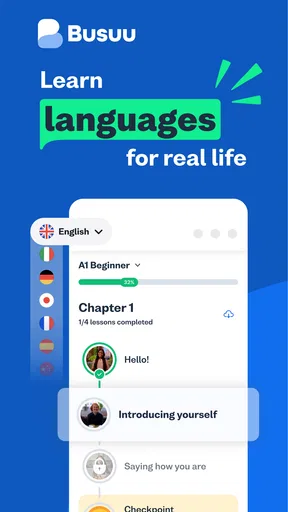
Right off the bat, Busuu greets you with a sleek and intuitive interface. It’s super friendly for beginners, which is a big plus. You just need to create an account or connect through Facebook or Google, and you’re good to go. The app offers a range of languages to choose from – think Spanish, French, Japanese, and more – 12 languages to be exact.
Once you select your language, Busuu asks about your current level. Are you a complete newbie, or do you have some prior knowledge? The app smartly adapts to your proficiency, so you always feel challenged but not overwhelmed.
Setting yourself up for a useful start
For a first-time learner, I would spend a moment choosing a level honestly rather than selecting one that sounds impressive. If you already know greetings or basic phrases, that does not necessarily mean you are ready to skip foundational material. A placement choice that is too ambitious can make early lessons feel oddly difficult; starting lower gives you a chance to confirm what you remember and fill in gaps before they become frustrating.
It also helps to decide what “progress” means before you begin. If you are learning for a trip, focus on being able to understand and say useful everyday phrases. If you need a language for work or study, you may care more about building dependable grammar and reading habits over time. Busuu can provide structure for either goal, but it cannot decide which vocabulary matters most in your life unless you bring that purpose to your practice.
The Learning Experience
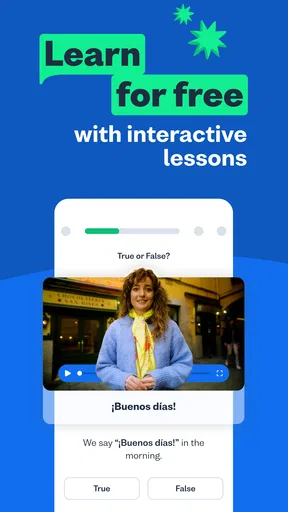
What I really enjoyed about Busuu is its structured approach. The lessons are broken down into bite-sized chunks, making it easy to fit them into your daily routine. Each lesson includes vocabulary, pronunciation, and grammar, ensuring you get a well-rounded understanding of the language.
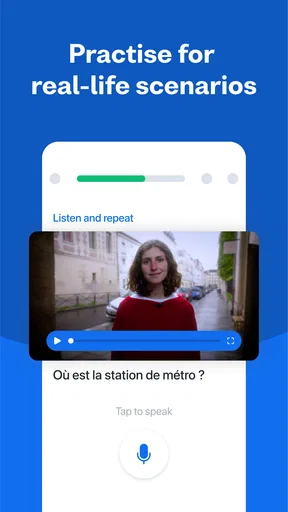
One cool feature is the speech recognition technology. You can practice speaking, and the app provides instant feedback on your pronunciation. It’s like having a mini language coach in your pocket!
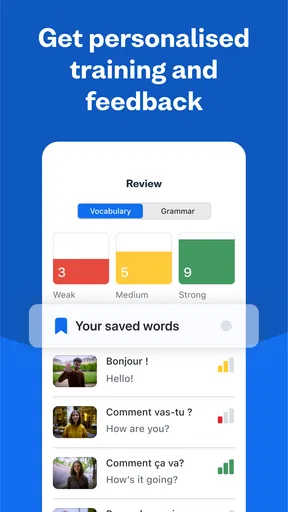
Plus, there are review exercises sprinkled throughout, helping you retain what you’ve learned. It’s not just about memorizing phrases; it’s about truly understanding the language.
Making one lesson stick
A useful way to turn a short session into a real-world win is to say each new phrase aloud and then try to recall it without looking. After a lesson, I would pick one expression I could imagine using soon, such as asking for help or ordering something, and make my own example with it. This small extra step reveals whether I can retrieve the phrase, rather than merely recognise the correct answer when it appears on screen.
Speech recognition can make speaking practice feel less awkward, especially when you are starting alone. I would still treat its feedback as practice guidance, not a final judgement of how natural I sound. Pronunciation involves rhythm and context as well as individual sounds, so repeating a phrase in a real conversation—or listening carefully to fluent speakers—adds something an automated check cannot fully replace.
One everyday routine that suits the app is a short session during a commute or a quiet break, followed later by a quick review at home. The first session introduces material; the second asks your memory to do some work. If you only open the app when you have a long free afternoon, it is easier to lose momentum. A modest, repeatable habit is more practical than waiting for the perfect study window.
Common points of confusion
It is easy to mistake completing a lesson for being able to use its material spontaneously. Recognition is the first step, not proof that a word or grammar pattern has become part of your active language. When an answer feels familiar but hard to produce, revisit it and speak it in a new sentence instead of rushing ahead. That is a sign to practise, not a reason to assume you have failed.
Another distinction worth keeping in mind is the one between guided exercises and open conversation. Busuu’s lesson path gives a learner a useful scaffold, while communication with another person brings unpredictable wording, accents, and follow-up questions. The two forms of practice support each other, but they are not interchangeable. If your goal is to hold a spontaneous conversation soon, make time to speak outside the lesson flow as well.
Community and Social Features
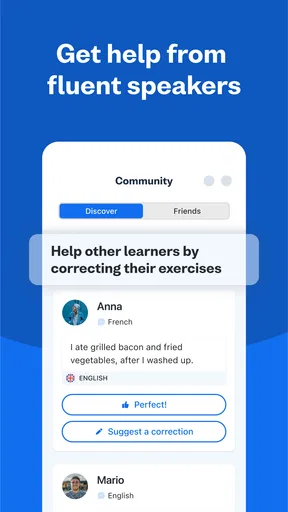
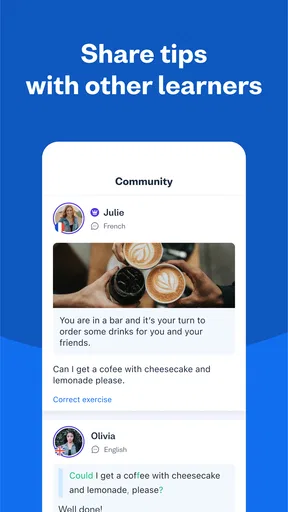
Now, here’s a feature that sets Busuu apart: its community. You can connect with native speakers and other learners, exchanging language tips and corrections. It’s a fantastic way to practice in real-life scenarios. And let's be honest, it’s just fun to make friends from around the world!
The app also offers a social feed, where users can post questions or share their learning journey. It's a supportive environment that keeps you motivated.
Using community feedback well
Community input is most valuable when you make a specific attempt first. Rather than posting a broad request for help, try writing or saying a short piece yourself, then ask about the part that feels uncertain. That gives other learners or native speakers something concrete to respond to and gives you a clearer lesson to carry forward. I would also look for patterns in corrections: one suggested change may be a preference, while repeated feedback about the same issue is a useful signal to review.
There is a trade-off here. A community can make study feel less solitary, but replies depend on other people being available and willing to respond. I would not plan a time-sensitive conversation around getting an immediate correction. Use the community as a valuable complement to the structured course, not as a guaranteed private tutor or a substitute for a teacher when you need sustained, detailed instruction.
Choosing a pace that survives a busy week
A realistic plan is to attach a lesson to something you already do: a break after lunch, a quiet train ride, or the few minutes before you settle in at night. On a day when concentration is low, reviewing familiar material can be a better choice than forcing yourself through new grammar. The point is to keep contact with the language without turning study into a chore you begin to avoid.
If you are learning several languages at once, be deliberate about switching. Each language deserves enough attention for you to remember where you left off, and frequent hopping can make progress feel scattered. For a first-time user, I would start with one language and one practical goal, then add another only if the first routine is genuinely established.
Community and course: where each helps
Compared with a conventional classroom, Busuu is easier to fit around an uneven schedule, but it cannot offer the same live exchange with a teacher who can pause and explain exactly why a response is confusing. Compared with a one-to-one tutor, it is a more self-directed way to practise; a tutor is usually the better fit if you need conversation tailored to a particular job, exam, or personal challenge. I see Busuu as a strong middle ground for independent learners who want more direction than a stack of flashcards.
It is also not the best match for someone who wants only entertainment or a quick translation tool. Lessons require attention, repetition, and a willingness to produce answers rather than simply look up a phrase. If you need to translate a menu or message immediately, a translation app is more direct. If you want to build the ability to understand and form language yourself, a course-based approach has a different, longer-term purpose.
Offline Mode and Premium Features
We all know the pain of losing internet connection, especially when you’re in the middle of a lesson. Thankfully, Busuu has an offline mode. You can download lessons in advance and study them anytime, anywhere. Super handy for commutes or travel, right?
While Busuu offers a free version, the premium subscription unlocks additional features. This includes advanced grammar lessons, official McGraw-Hill Education certification, and personalized study plans. If you’re serious about language learning, it might be worth the investment.
Deciding whether paid access fits your needs
I would begin with the free option and pay attention to which parts of the experience I actually use. If you find yourself wanting more grammar depth, a personalised plan, or the certificate, those additions may make a paid option relevant to your goal. If you mainly want occasional practice and the basics available in your current course are enough, there is no need to assume that paying is automatically the next step.
Before choosing any in-app purchase, check the offer and its terms inside the app, since the available purchases vary in price. Think about the feature you expect to use and whether it solves a real problem for you. A certificate may matter to someone who values a formal record of study, while a traveller preparing for everyday interactions may care more about steady practice and useful phrases.
Offline lessons are especially practical when you know your connection will be unreliable. I would download material before leaving rather than waiting until a station or airport connection becomes inconvenient. That makes the app a more dependable option for planned study on the move, though it does not remove the need to choose a time when you can concentrate.
Who will get the most from it
Busuu is a good fit for a beginner who wants a clear starting point, an independent learner who benefits from short guided sessions, or someone returning to a language who needs to rebuild confidence and structure. It can also help a traveller establish a foundation before a trip, especially if they practise common expressions aloud instead of only tapping through exercises. The most important ingredient is not a perfect schedule; it is a reason to come back and use what you have learned.
I would look elsewhere if you need a fully customised course, regular live conversation, or immediate translation more than ongoing learning. A classroom or tutor is better when you need a person to diagnose persistent mistakes in depth. A reference book or grammar resource can be more efficient if you already know how to study independently and only need explanations on specific points. Busuu’s advantage is its combination of a guided path, practice, and community—not that it replaces every other tool.
Final Thoughts
So, what’s the verdict on Busuu: Learn & Speak Languages? Honestly, I’m impressed. It’s user-friendly, interactive, and offers a comprehensive learning experience. Whether you’re learning for travel, work, or just for fun, Busuu makes it accessible and enjoyable.
The community aspect adds a unique touch, making the learning process less isolating. And with the option to learn offline, you’re never tied down by connectivity issues.
If you’re looking to dive into a new language, give Busuu a try. It might just be the tool you need to unlock your linguistic potential. Happy learning!
Privacy and Permissions
See what permissions an app requests and how it handles your data.
- Identity
- find accounts on the device, add or remove accounts
- Calendar
- read calendar events plus confidential information, add or modify calendar events and send email to guests without owners' knowledge
- Contacts
- find accounts on the device
- Photos/Media/Files
- read the contents of your USB storage, modify or delete the contents of your USB storage
- Storage
- read the contents of your USB storage, modify or delete the contents of your USB storage
- Microphone
- record audio
- Wi-Fi connection information
- view Wi-Fi connections
- Other
- view network connections, create accounts and set passwords, full network access, run at startup, reorder running apps, use accounts on the device, control vibration, prevent device from sleeping
Verdict
Strengths of Busuu: Learn & Speak Languages
- Wide range of languages offered.
- Interactive exercises boost engagement.
- Offline access for learning on the go.
- Personalized study plans enhance progress.
- Community feature for speaking practice.
Limitations of Busuu: Learn & Speak Languages
- Limited free content available.
- Premium features behind paywall.
- Occasional app performance issues.
- Some languages have fewer resources.
- Requires consistent internet for updates.
Similar Picks in This Category
View All
Duolingo: Language Lessons
Duolingo4.7

Google Classroom
Google LLC2.8

Unacademy: Learn & Crack Exams
Unacademy3.2

Bible App for Kids
Life.Church4.4

Cake - Learn English & Korean
Cake Corp.4.7

Brainly: AI Homework Helper
Brainly4.5
You May Also Like
View All

Frequently Asked Questions
What languages can I learn with Busuu?
Busuu offers a wide range of languages for learners, including popular options like Spanish, French, German, Italian, and Chinese. Additionally, you can explore less common languages such as Turkish, Russian, and Arabic. Each language course is designed to cater to various proficiency levels, from beginners to advanced learners.
Is Busuu suitable for complete beginners?
Yes, Busuu is designed to accommodate learners at all levels, including complete beginners. The app provides a structured curriculum that gradually builds up your skills, starting with basic vocabulary and phrases before advancing to more complex grammar and conversation practice. Interactive exercises and visual aids help reinforce learning.
Does Busuu offer a free version, or is it only available as a paid subscription?
Busuu offers both free and premium versions. The free version provides access to basic language lessons, while the premium subscription unlocks additional features such as advanced grammar lessons, offline mode, and personalized feedback from native speakers. The premium plan enhances the learning experience with more comprehensive resources.
How effective is Busuu compared to other language learning apps?
Busuu is highly effective due to its structured courses, engaging content, and community interaction. Its unique feature of receiving feedback from native speakers provides invaluable real-world practice. While some apps focus solely on vocabulary or grammar, Busuu offers a balanced approach that includes speaking, listening, reading, and writing exercises.
Can I use Busuu offline?
Yes, with a premium subscription, Busuu allows users to download lessons for offline use. This feature is particularly useful for learning on the go, ensuring you can continue your studies without an internet connection. Offline access makes it convenient to maintain consistent practice, regardless of your location.
